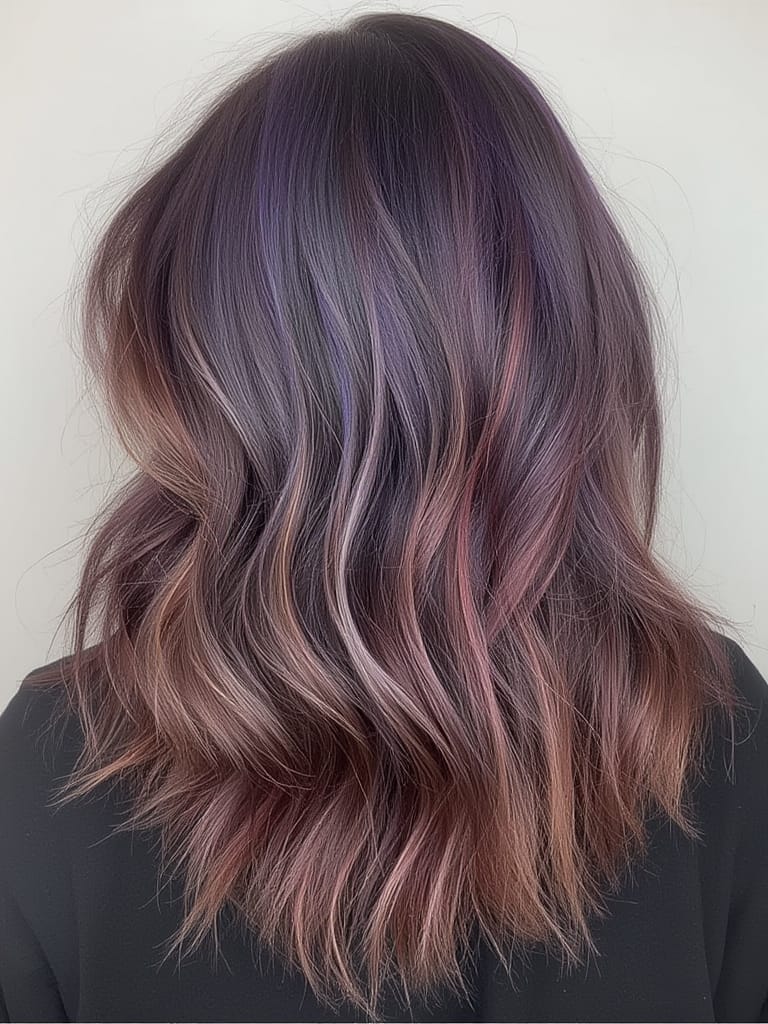

Top Hair Dryers for Fine Hair in 2025: Lightweight Power for Salon Results
Introduction
Is your fine hair falling flat after blow-drying, despite your best efforts? You’re not alone. Fine hair requires special attention, particularly when it comes to selecting the right tools that won’t weigh it down or cause damage. Finding the perfect hair dryer for fine hair 2025 can be the difference between limp, lifeless locks and bouncy, voluminous tresses that turn heads.
Today’s innovative technology has revolutionized how we care for delicate strands, introducing lightweight yet powerful options that deliver salon-quality results from the comfort of your home.
Table of Contents
Must-Have Products & Tools
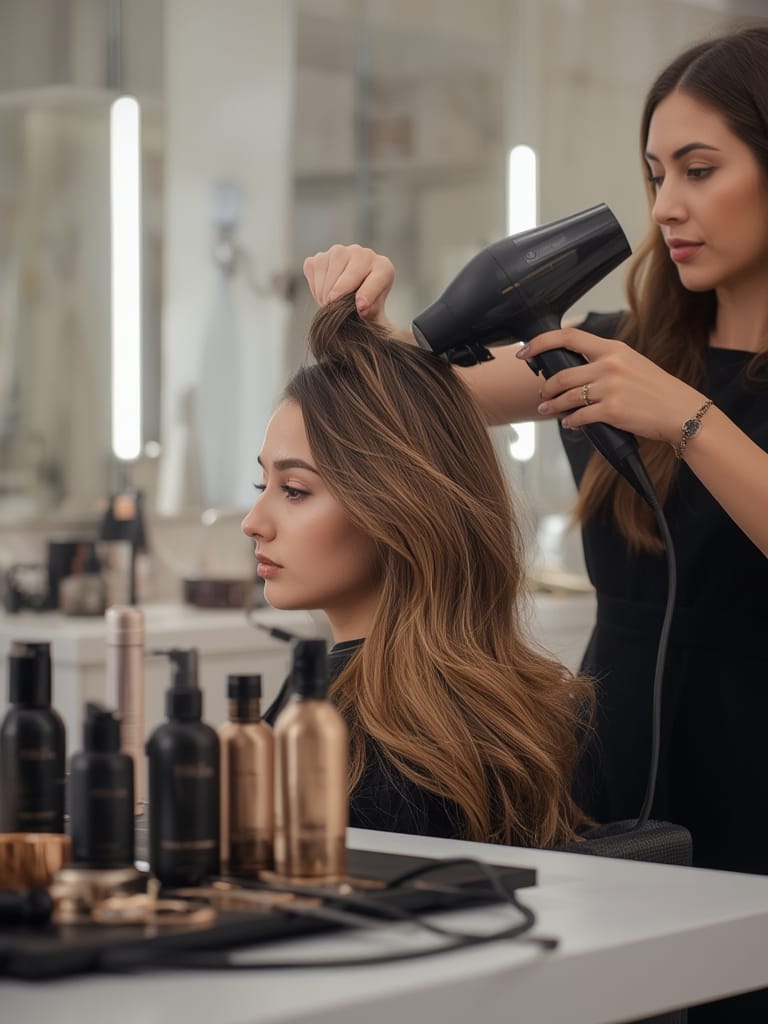
When shopping for the best hair dryer fine hair, lightweight hair dryer, salon hair dryer fine hair, consider these top performers of 2025:
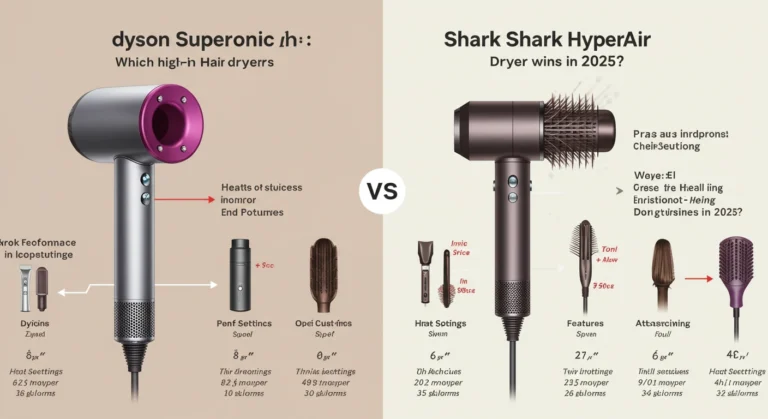
Dyson Supersonic Ultra – The newest iteration weighs just 8 ounces with intelligent heat control technology that protects shine while adding volume. Worth the investment at $499.
GHD Helios Nano – A luxury alternative featuring customizable airflow settings specifically engineered for fine hair types. Priced competitively at $279.
T3 AireLuxe Volumizing – Includes a specialized diffuser for root lift and negative ion technology to reduce frizz. Budget-friendly at $169.
Essential accessories: Ceramic round brush (for volume), sectioning clips, and heat protectant spray.
Step-by-Step Routine or Method
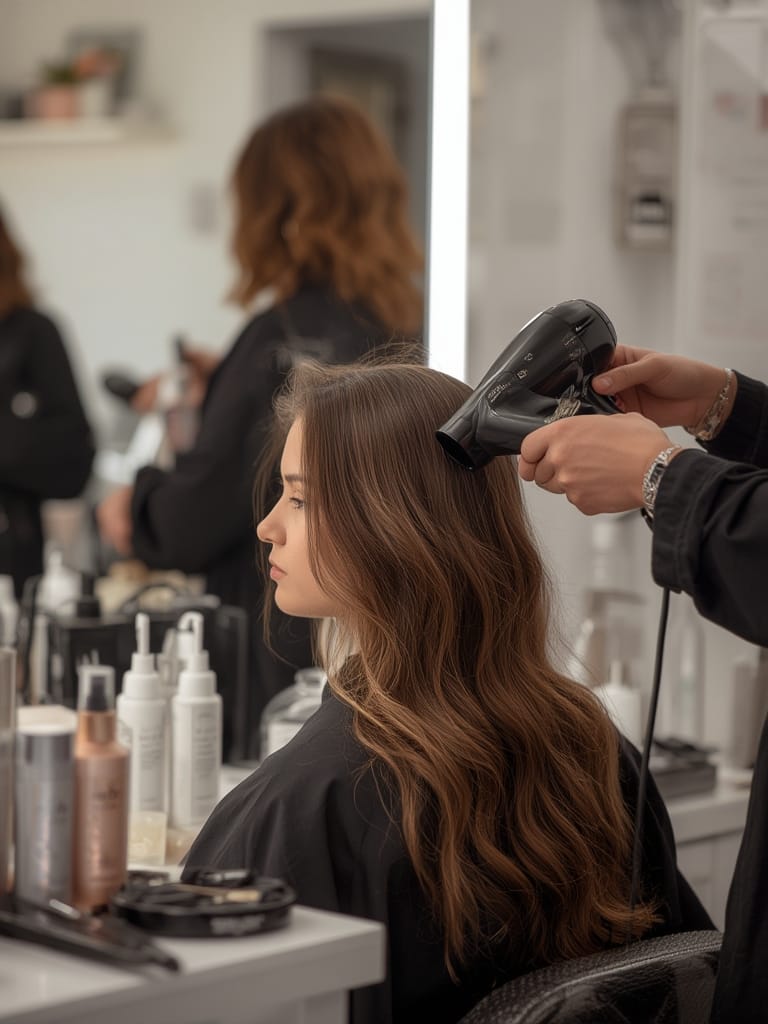
Follow this professional drying technique for maximum volume and minimum damage:
Pre-dry preparation: Apply volumizing mousse to damp (not soaking) hair, concentrating on roots. Work a quarter-sized amount through mid-lengths to ends.
Pro tip: Flip your head upside down and rough dry to 70% before styling for natural lift.Section strategically: Divide hair into 4-6 workable sections using clips. Begin with nape sections, working upward.
Pro tip: Smaller sections dry faster and create more defined volume.Directional drying: Hold the dryer 6 inches away, pointing downward to seal the cuticle. Use medium heat and high air flow.
Stylist secret: Alternate between hot and cool shots to set the style.Root lifting: For crown sections, direct the airflow upward and perpendicular to the scalp with a round brush.
Expert trick: Over-direct sections for maximum volume that lasts all day.
Key Benefits or Results
Using the right hair dryer specifically designed for fine hair delivers transformative benefits:
- Increased volume without weight: Studies show ionic technology can increase perceived volume by up to 30% while reducing drying time by 40%.
- Reduced breakage: Heat sensors in premium models adjust temperature up to 20 times per second, reducing damage by 65% compared to traditional dryers.
- Extended style longevity: Precision airflow technology helps styles last 1-2 days longer than those created with conventional dryers.
- Improved shine: Infrared heat penetrates the hair shaft more gently, preserving natural oils and increasing shine by up to 35%.
Professional Tips & Alternatives
For even better results, customize your approach:
- For extra-fine hair: Use a pre-blow dry volumizing spray containing panthenol or rice protein for temporary shaft thickening.
- Curly fine hair: Opt for a diffuser attachment and scrunch upward while drying at 75% power to maintain curl definition without deflating volume.
- Humidity concerns: In damp climates, finish with a cool shot that’s 20 seconds longer than usual, paired with an anti-humidity spray.
- Heat-free alternative: Try the “roller set” technique with velcro rollers and just the cool setting for damage-free volume.
Common Mistakes to Avoid
Don’t sabotage your efforts with these common errors:
- Overheating: Fine hair never needs the highest heat setting—medium is always sufficient and less damaging.
- Drying completely straight: Leave hair slightly damp at the roots (about 5%) for better lift and style memory.
- Incorrect nozzle positioning: Pointing upward lifts cuticles causing frizz; always aim downward except at roots.
- Using the wrong brush: Metal brushes overheat fine hair; opt for boar bristle or ceramic versions instead.
Maintenance & Aftercare
Extend your style’s lifespan with these maintenance practices:
- Clean your dryer’s filter weekly to maintain optimal airflow and prevent overheating.
- Store your dryer hanging rather than wrapped with its cord to prevent internal damage.
- Refresh second-day styles with dry shampoo at the roots, followed by a 30-second cool shot with your dryer.
- Apply a lightweight hair oil only to ends (never roots) to maintain shine between wash days.
Conclusion
Finding the perfect hair dryer for your fine hair doesn’t have to be complicated. The 2025 models offer unprecedented technology that delivers volume, protection, and salon-worthy results with minimal effort. By selecting the right tool and following our professional techniques, you’ll transform your fine hair routine from frustrating to fabulous. Remember, the right hair dryer isn’t just about drying—it’s about creating your best hair day, every day.
FAQs
- How often should I replace my hair dryer if I have fine hair?
Professional-grade hair dryers should be replaced every 3-5 years, or sooner if you notice inconsistent heat or reduced airflow. - Can I use a diffuser attachment on fine hair?
Yes! A diffuser is excellent for fine hair with natural texture or waves, as it distributes heat gently while building volume. - What wattage is best for a hair dryer for fine hair?
Look for 1800-2000 watts—powerful enough for efficiency but not so strong it damages delicate strands. - Should I use ionic technology if I have fine hair?
Yes, but selectively. Use ionic technology for smoothing, but switch to non-ionic settings when prioritizing volume. - How can I prevent static when blow-drying fine hair?
Use a wooden or carbon fiber brush, finish with a cool shot, and apply a tiny amount of argan oil to your brush (not directly to hair).